
Where’s the Village? It’s on the Dancefloor
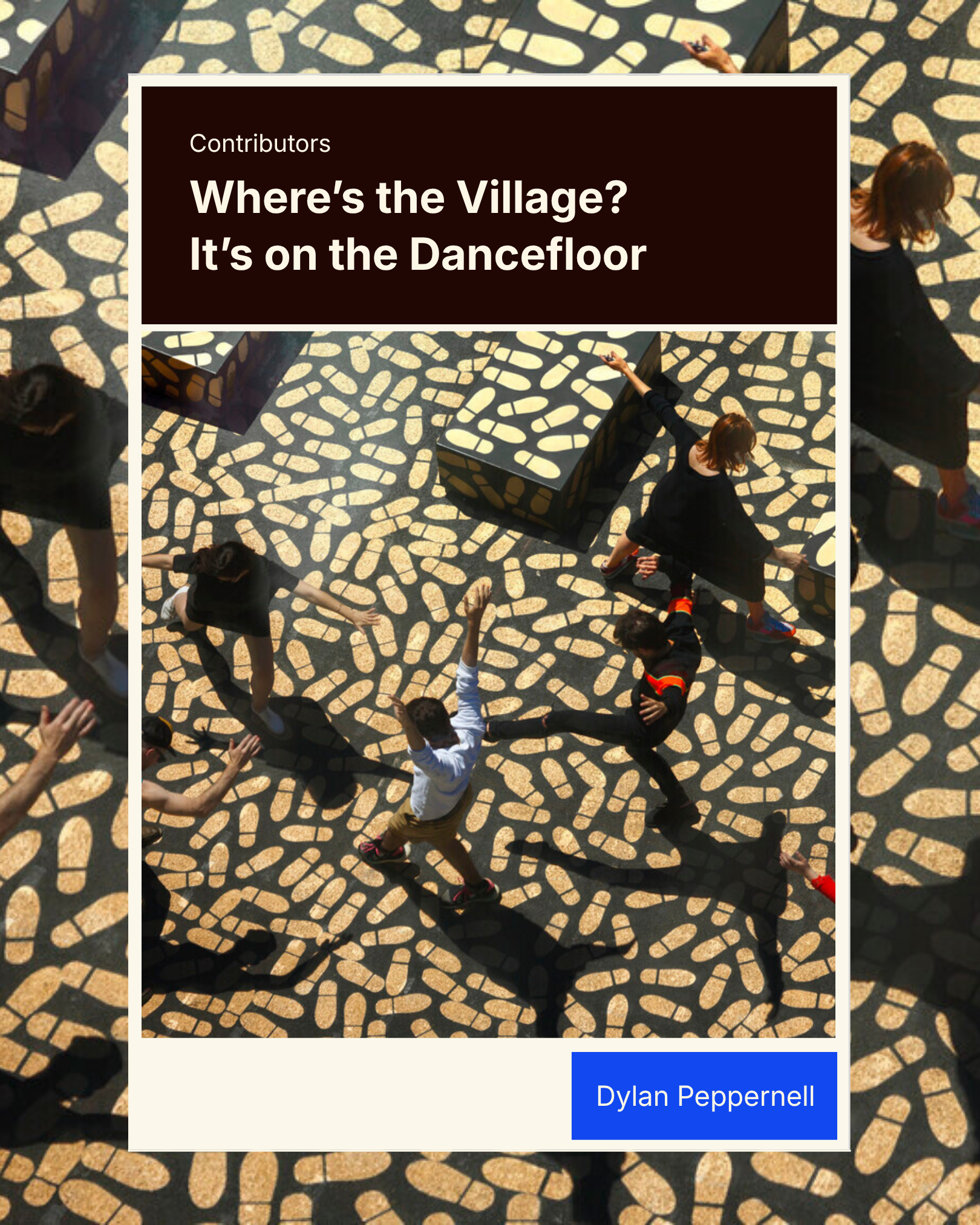
As someone who has no musical bone in their body, I have always been fascinated by the congregation of community around music: why they appear and reappear at clubs, gigs and festivals, and how they manifest on dancefloors of all shapes and sizes.
We tend to imagine community as something familiar, close, and stable: neighbours who know each other by name, families that gather around a table, the same faces in local places. Community is usually described through conversation, regular contact, and a shared history - but a crowded dancefloor is rarely described, or seen, in the same way.
On a dancefloor, community is often unspoken. It appears through small negotiations: stepping aside to let someone through, connecting onto a human chain that moves through the crowd. People make room, close gaps, and respond to the bodies around them. It is participation without instruction. Everyone contributes - whether they are a good dancer or not.
For a few hours, strangers become a crowd. The crowd becomes a shared experience. Through shared experience, something resembling community begins to appear and reappear over time.
Then everyone leaves.
The lights come on. The building becomes a warehouse, the underpass becomes the belly of a bridge, and the velodrome belongs once more to the cyclists. The crowd disperses and ordinary life resumes.
Perhaps community does not need to be permanent to be lasting. Like an old friendship, it does not need constant contact to remain intact. When people gather and gather again, there is no need to start from the beginning.
Perhaps what makes the dancefloor significant, is not simply that people are together, but that they are attentive together. In a time where our attention is constantly divided, personalised, and pulled elsewhere, the dancefloor gathers it back into one place.
It may disappear by morning, but that does not mean it is gone.